
11 Days / 10 nights
ex Osaka to Tokyo
Prices From
AUD $11,276 /pp twin share*
Save up to 20% on select suites
when booked by 30 Apr 2026!
Departs
06 May 2026
05 May 2027
*20% off selected cabins. Second Wave Sale, Conditions apply, new bookings only, cannot be used in conjunction with any other offer, limited availability or until sold out, when booked by 30 April 2026.

Explore Japan ‘the Land of the Rising Sun’, on this 11 day itinerary from Osaka to Tokyo (or reverse) spending a day in the South Korean city of Ulsan.
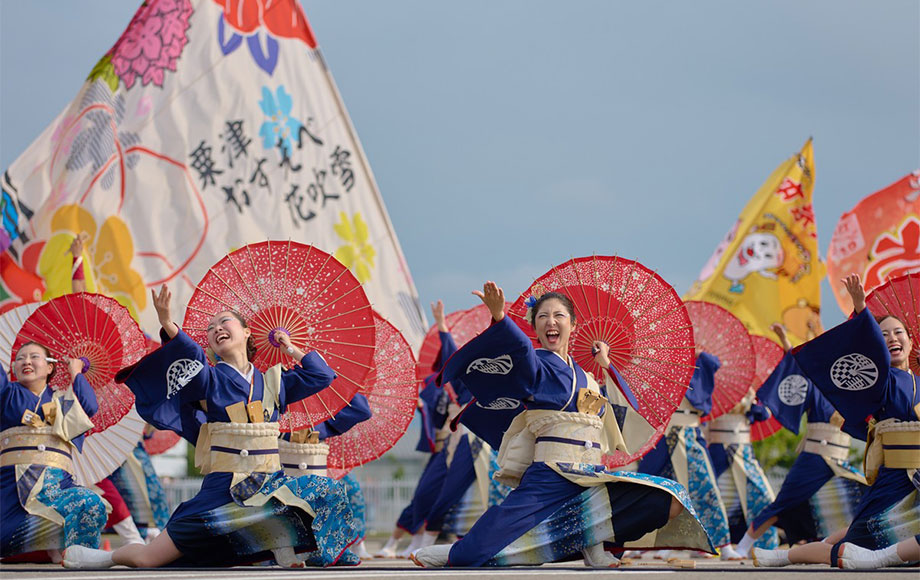
This all-inclusive boutique cruise onboard the expedition ship Heritage Adventurer will showcase the scenic beauty, history and incredible culture of Japan, exploring medieval castles and temples, famous gardens, iconic cities. and remote islands tourists rarely have the opportunity to experience. A country rich in history and tradition, Japan seamlessly blends ancient customs with ultra-modern living and the bright lights of fascinating cities.
Just some of the highlights include the five-storey Pagoda of Miyajima, the 17th century Matsue Castle and the sobering Hiroshima Peace Memorial Park with its eternal Flame of Peace. For art lovers, there is also the opportunity to explore traditional art through visiting galleries and meeting local artists, as well as learning about Japanese paper making in the town of Matsue.
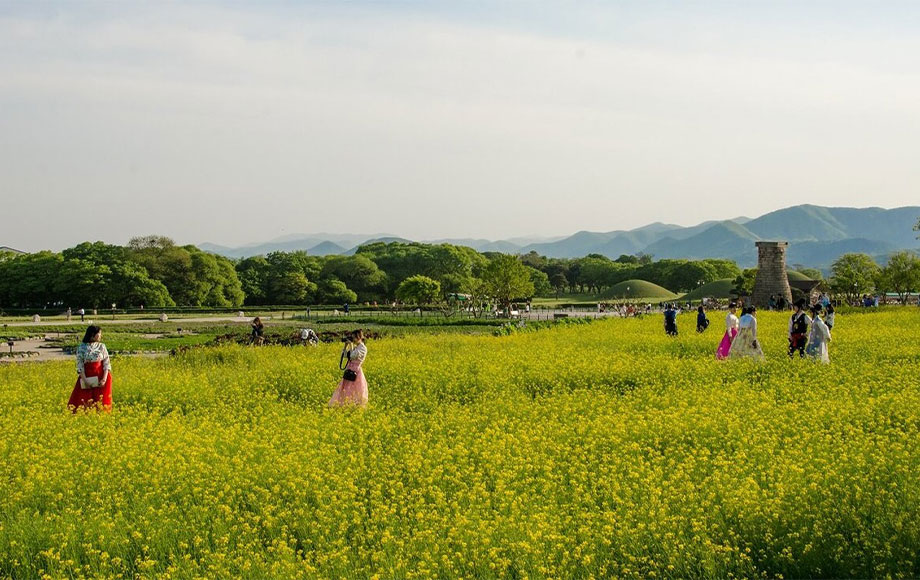
Enjoy a day in the South Korean city of Ulsan, where you will visit the fascinating UNESCO World Heritage Site Gyeongju – the ‘museum without walls’ among other highlights. Meanwhile, in Uwajima, one of Japan’s premier pearl producers, there will be the chance to visit one of the city’s traditional pearl farms.
For those with a passion for nature there will be a chance to visit Daisen-Oki and Hakusan National Parks, Kenrokuen Garden – one of the Three Great Gardens of Japan, Samurai-era Tenshaen Garden and one of Japan’s most famed gardens the 28-acre formal 17th Century Koraku-en garden and visit one of Japan’s main bonsai centres at Kinashi.
Tour details
- One night pre-cruise hotel accommodation (inc. dinner/breakfast)
- All on board ship accommodation with meals
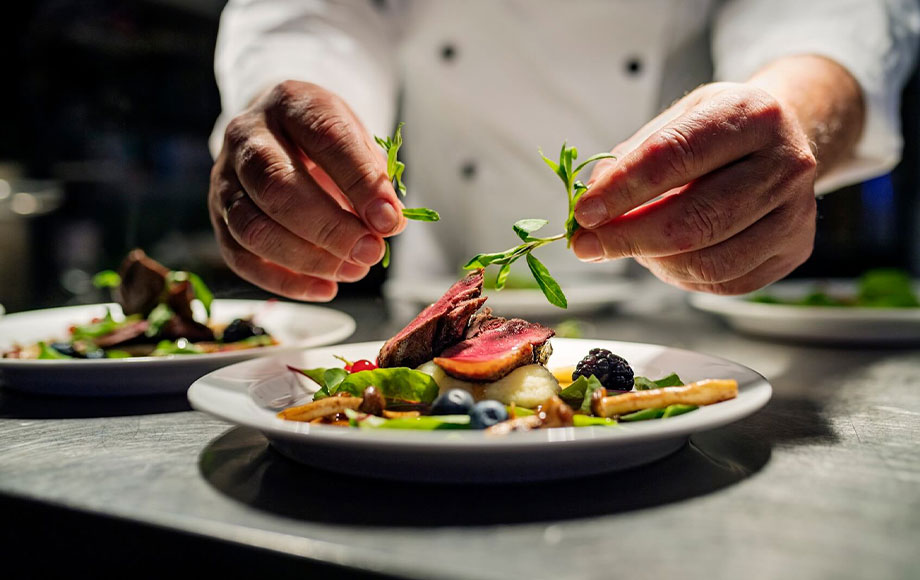
- House beer, wine and soft drinks with lunch and dinner
- Pre/post cruise transfer
- All expedition shore excursions and activities.
- Programme of lectures by noted naturalists
- Landing fees
- Visit several beautiful castles including 17th century Matsue Castle
- Expert Guest Speakers and Japanese guides
- Explore the historic mountain settlement and UNESCO World Heritage Site of Shirakawa-go
- Hiroshima’s Peace Memorial Park and harrowing museum
- Enjoy the scenic beauty of some of Japan’s magnificient national parks
- Discover lesser visited sites and breathtaking islands
- In Hagi wander the Teramachi District with its temples and shrines and the Jokamachi District with its old Samurai houses
- Spend a day in the South Korean city of Ulsan
- Enjoy a visit to the UNESCO listed site Gyeongiu – the ‘museum without walls’
Osaka is served by two airports – Kansai (KIX) for international flights and Osaka International Airport (better known as Itami; ITM). The Shinkansen train is a great option from Tokyo taking 2.5 – 3 h. For travelers with a Japan Rail Pass, the best way between Kansai and Osaka is the JR Haruka airport express train to Tennoji (Y1710, 35 minutes) or Shin-Osaka (Y2330, 50 minutes), and then a subway or taxi to your final destination.
Itinerary
Sacred Japan & South Korea
11 days/10 nights
Day 1
Osaka
Arrive at Honshu’s largest port city Osaka where modern architecture and a vibrant dining scene are nestled alongside the 16th Century shogunate Osaka Castle, and make your way to your hotel where you will spend the first night of the expedition. This evening meet your fellow voyagers and expedition guides over dinner at the hotel.
Day 2
Osaka
Breakfast at the hotel before exploring Osaka, visiting such famous sites as Minoh Park and Osaka Castle. Minoh Park is one of Japan’s smallest National Parks with an area of just 9.6 sq kms. It is home to the 33-metre high Minoh Waterfall and diverse wildlife including Japanese Salamander and protected Mino Monkeys. Explore Osaka Castle, one of Japan’s most famous landmarks, take in the views from Osaka Castle Main Tower and relive dramatic stories of warlords and Osaka’s fascinating history. Then it’s time to board your cruise ship the Heritage Adventurer for lunch and a warm welcome from the Captain and Expedition Team as you set sail for Takamatsu.
Day 3
Tamano
From the port of Uno-Ko visit Japan’s most famed gardens, the 17th century Koraku-en, which translates as ‘garden of pleasure after’. Continue to Kurashiki, and explore the old merchant quarter, and its fine 17th-century wooden warehouses painted white with traditional black tiles. If you are interested in history and art you may wish to take a full day excursions to Naoshima Island, known for its architecture and art museums, including Chichu Art Museum and Benesse House, featuring work by Japanese and international artists.
Day 4
Hiroshima & Miyajima
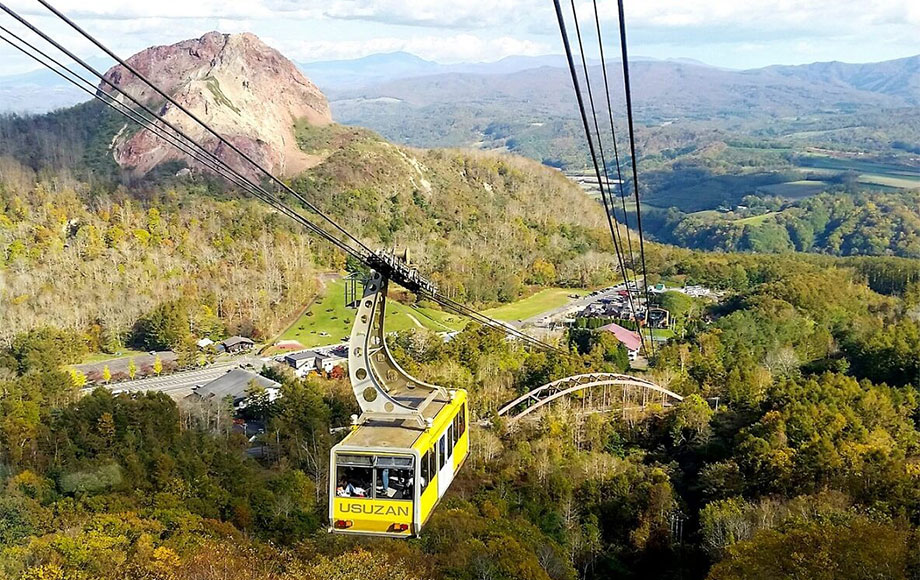
Despite its tragic history as the site of the world’s first atomic bomb attack on the 6 August 1945, Hiroshima is a vibrant and thriving cosmopolitan community. We plan to visit the beautiful Peace Park and Museum, with its sombre cenotaph containing names of atomic bomb victims, and the permanently lit ‘Flame of Peace’. After visiting the Peace Park we will travel to Miyajima Island, considered one of Japan’s most scenic spots and the location of the Torii Gate and the Daisho-in Buddhist temple. For those after a nature fix, ascend Mount Misen on Miyajima Island by cable car and enjoy a hike, admiring the views below of the Shinto Shrine and Torri Gate.
Day 5
Hagi
Hagi was a minor fishing port until Mori Terumoto fortified it in 1604 and it was Mori Samurai that helped spark off the anti-Tokugawa revolt in the mid-19th century. Today it is better known for its traditional pottery making. This morning we will explore the Teramachi District with its temples and shrines, the Jokamachi District, where we find the old Samurai houses and also take time to explore Hagi Castle, Shizuki Park and Tokoji Temple. This afternoon travel to the outskirts of the city and the Yoshika Taibi Memorial Museum which is dedicated to a large collection of Hagiyaki pottery which was highly prized in the Edo period as wares for tea ceremonies. Alternatively, discover the natural wonders of 300 million year old limestone Akiyoshido Cave.
Day 6
Ulsan, South Korea
Today we cross the Sea of Japan to Ulsan in South Korea where we plan to visit the UNESCO World Heritage Site of Gyeongju. The capital of the Silla Dynasty and dating back to the first millennium, Gyeongju is known as ’the museum without walls’ and is full of ancient Korean history and Buddhist culture. Enjoy strolling through hundreds of excavated monuments, temples, tombs and pagodas, and experience Korean delicacies, cultural performances, and visit the National Museum with its gold jewellery, metal weapons, and distinctive pottery. Today provides a perfect taste of the best South Korea has to offer.
Day 7
Matsue
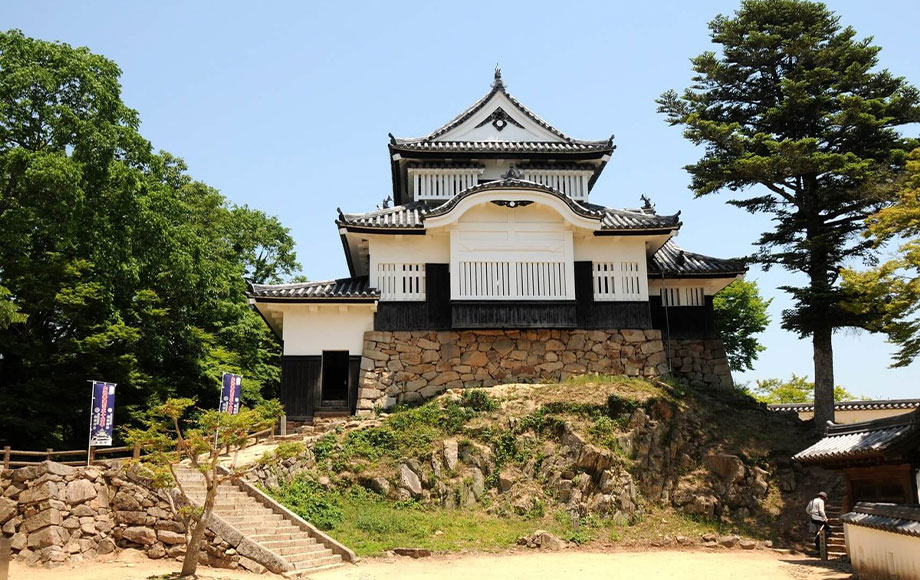
This morning we arrive at the port of Sakaiminato, entry point to Matsue, known as ‘the town of water’ due to being situated between Lake Shinji and Lake Nakaumi. We plan to visit Matsue Castle, a national treasure and one of Japan’s few largely intact 17th Century castles. Other options today may include exploring Daisen-Oki National Park, steeped in beauty and history it’s also the home of rare flora and fauna including the giant salamander, visiting the picturesque Yuushien Garden (the April departure coincides with the iconic annual Yuushien Peony Festival where we plan to experience the spectacle of more than 30,000 of the colourful blooms floating on serene ponds and lining the traditional garden’s paths in a floral carpet), the Adachi Museum of Art, learning about the art of Japanese paper making at the Yakumo-mura village, or perhaps you may wish to spend some time exploring the picturesque streets and local canals.
Day 8
Kanazawa
Options today include exploring the historic mountain settlement and UNESCO World Heritage Site of Shirakawa-go, high in the remote mountains of the Shogawa River Valley in Hakusan National Park. Take in the sights on mountain walks and experience the unique cultural traditions including the region’s iconic Gassho-zukuri farmhouses, some of which are more than 250 years old, designed to withstand the heavy snow in winter and provide a large attic space for cultivating silkworms. Alternatively explore the rich art centre of Kanazawa discovering some of the unique styles of Japanese art. Kanazawa is rightly famous for its Kutani-style pottery, exquisite lacquerware, gold-leaf workmanship, hand painted silk, and classical Noh dance-drama performed since the 14th Century. Wander winding cobblestone streets, elegant restaurants, craft galleries and visit the impressive Edo-period Kenrokuen Garden, one of the Three Great Gardens of Japan, and explore the Omicho Market boasting everything from flowers, to crafts and food.
Day 9
Sado Island
Today explore the remote Sado Island off the coast of Niigata with it’s stunning natural scenery, wildlife and rich history. Once political exile it now boasts rich cultural and religious life. Also home to the Japanese Crested Ibis which is extinct on the mainland, and the iconic Taraibune Tub Boats, which you will have the opportunity to experience. Sado Island is widely considered a perfect miniature version of Japan. Visit the Shukunegi Village National Important Preservation Area and learn more about traditional taiko drumming at the Sado Island Taiko Centre.
Day 10
Niigata to Tokyo
This morning sail into the bustling port town of Niigata, famous for snow, rice, sake, hot springs and the six-arched, granite-sided stone Bandai Bridge, designated as a Nationally Important Cultural Property in 2004, and one of the most scenic spots in the city. Enjoy breakfast before travelling by Shinkansen, ‘bullet train’, to Tokyo. Enjoy an evening at your leisure. Please note: the 2027 departure finishes on Day 10, disembarking in Osaka.
Day 11
Tokyo
After breakfast continue your adventure or take a complimentary coach, departing 9am, to Tokyo International Airport (Haneda Airport).
Heritage Adventurer
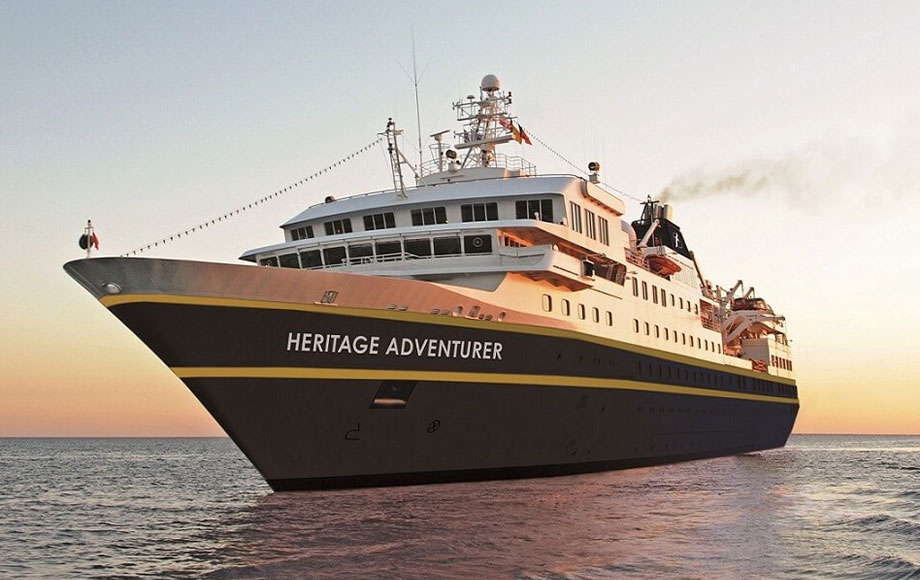
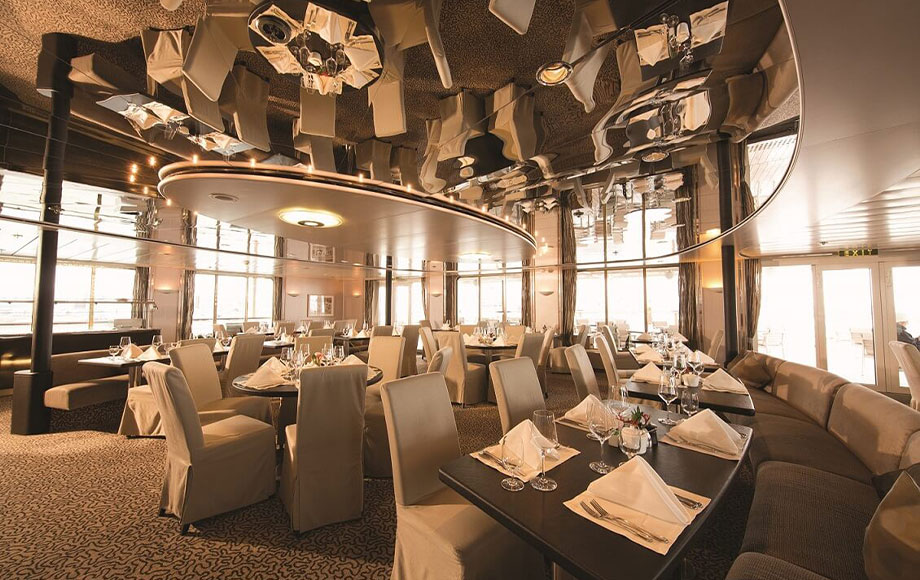
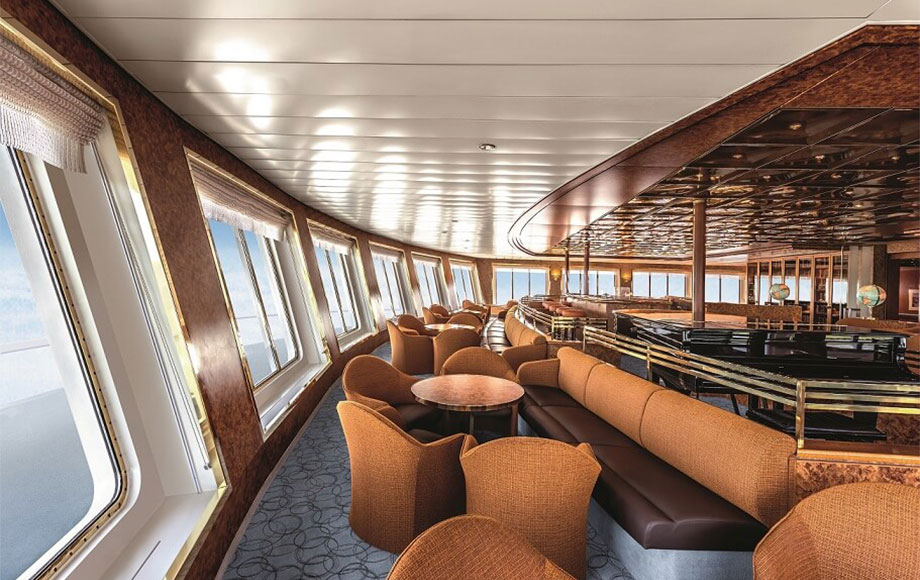
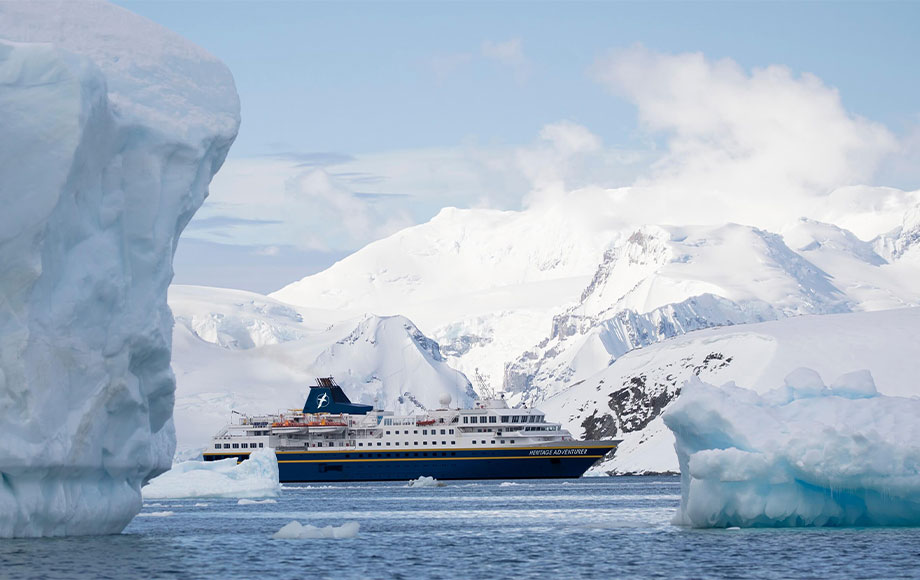
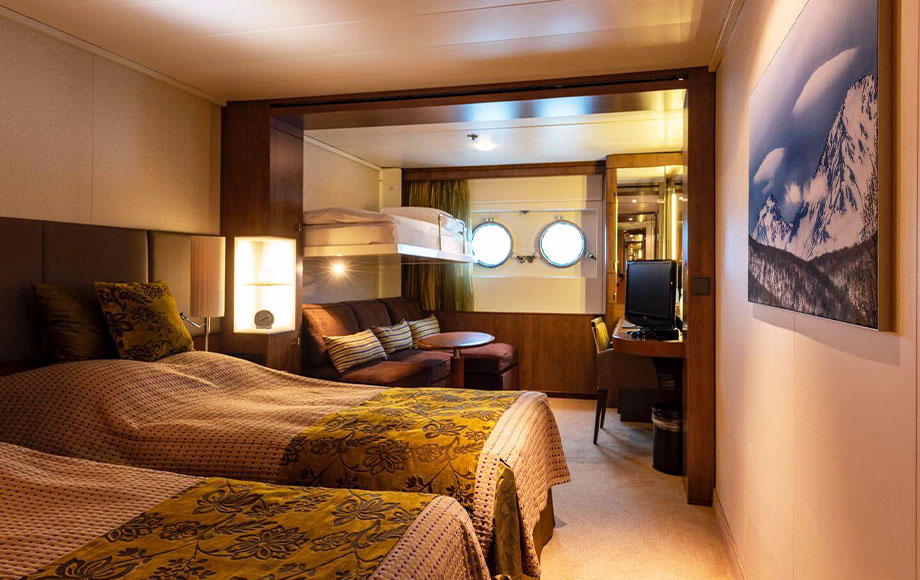
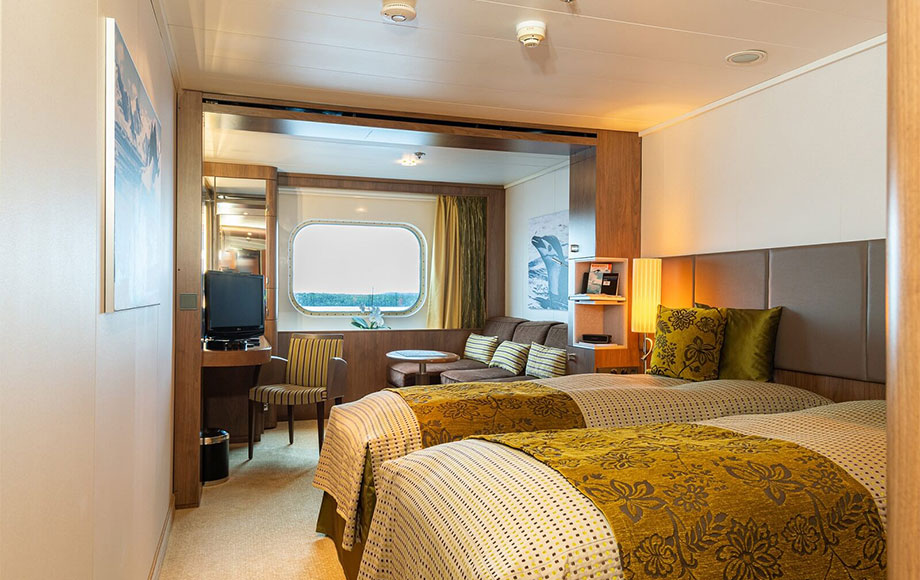
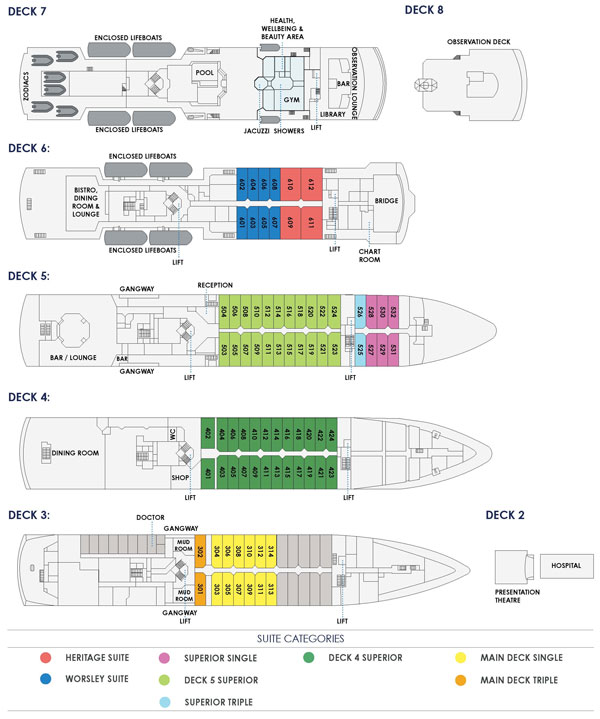
Built in 1991 for Polar expedition travel, the Heritage Adventurer (formerly the MS Hanseatic) holds the highest passenger-ship ice-class rating (1A Super). Originally designed to accommodate 184 guests, this world-class polar pioneer now welcomes just 140 passengers, creating a more spacious, comfortable and personalised onboard experience. Facilities include superb indoor and outdoor viewing locations including the Observation Lounge (with 270-degree views), a library, pool, gym, hot tub and steam room. Guests can relax in their comfortable cabins that span 4 decks or meet up with fellow guests in the café or bar. Accompanying each voyage is a world-renowned team of naturalists, botanists, historians and experts as well as a fleet of 14 Zodiacs. The vessel also has an Open Bridge Policy.
- Classification: Lloyds 1AS, GL E4
- Year built: 1991
- Accommodation: 140 guests
- Shipyard: Rauma, Finland
- Engines: 3,940 horsepower (x2)
- Maximum speed: 15 knots
- Cruising speed: 12 knots
- Range: 8,600 nautical miles
- Gross Tonnage: 8,378gt
- Length: 124 metres
- Zodiacs: 14
More Japan Itineraries
Sacred Japan & South Korea
Explore Japan ‘the Land of the Rising Sun’, on this 11 day itinerary from Osaka to Tokyo (or reverse) spending a day in the South Korean city of Ulsan.
Subscribe below
Sign up to receive updates about exciting journeys, special offers and more.
"*" indicates required fields